
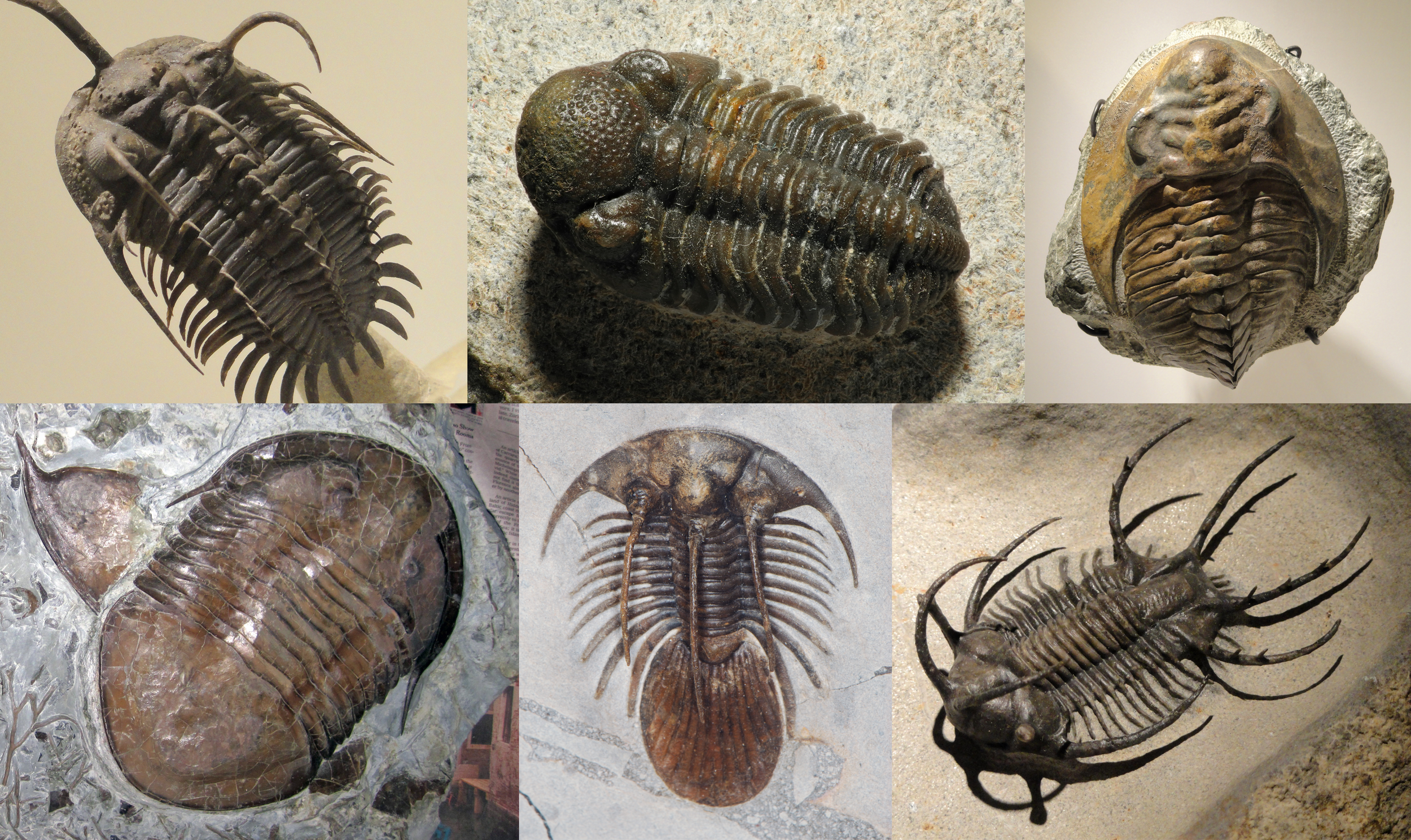
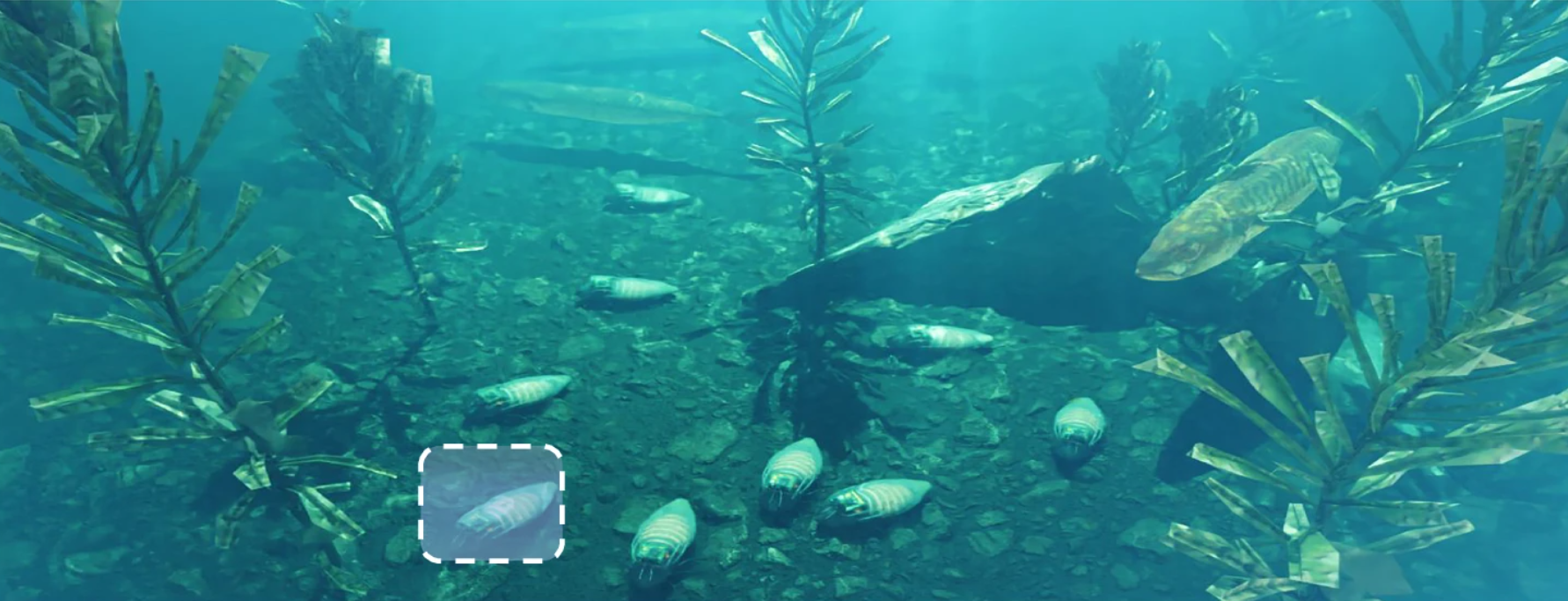
One of the most successful dynasties in all of Earth’s history is one not filled with serrated teeth, scales, or towering giant reptiles, but with unassuming little sea-bugs.
Trilobites are one of the most well-known groups of animals in the fossil record. This is because of their huge diversity, longevity, and because their shells are made of minerals, making them easily fossilized. They lived for 270 million years, a timescale far beyond our comprehension, and over 22,000 species are known. Today, we’ll be talking about the long history of these animals, what led to their slow downfall, and the many things that we learn from them to help us.
Rise and Fall of a Dynasty
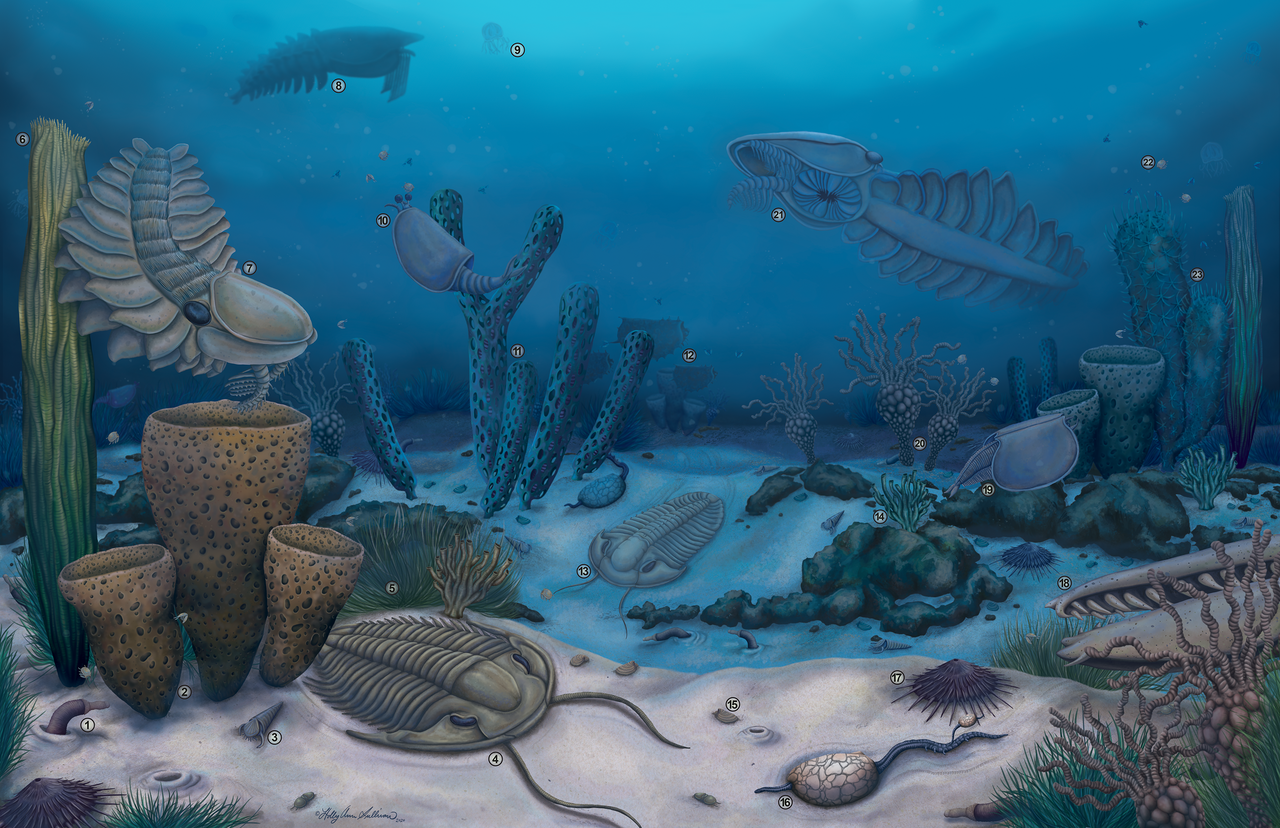
Trilobites diversified in the Cambrian Period, as depicted in this reconstruction with various other Cambrian animals.
Image credit: Holly Sullivan, CC BY 4.0
Trilobites first appeared in the Cambrian Explosion over 538 million years ago, one of the most influential events in Earth’s history [1]. This is the time in the fossil record when complex animal life kickstarted its diversity, and large-scale ecosystems spread across the oceans.
During the Cambrian, trilobites were mostly benthic (living on the bottom of the seabed), but in the following time periods, they diversified into many other niches. Their shells developed elaborate structures like horns, rays, ribs, and other fascinating patterns. Some swam freely in the open ocean, and some even became planktonic [1]. There were so many variations that this blog would be unreasonably long if we discussed many of them in detail.
Unfortunately, their diversity became limited during the latter half of their time on Earth due to several large geologic events, such as a major ice age. The nail in the coffin came from the Permian Mass Extinction, also known as the Great Dying. This was the most catastrophic extinction event in prehistory, and they were unfortunate enough to be a part of it [1]. And so, the age of the Trilobites finally came to an end. However, their legacy remains in their fossils, and they still help us today.
Mummified Time Capsules
Trilobites were so common in the time periods that they lived in that they are used by geologists as Index Fossils. If geologists are surveying a rock formation and they find a trilobite fossil, they can immediately know that the rock formation is dated to one of the periods that trilobites lived in, saving a lot of time [2].
Bug-Eyed Cameras
The eyes of trilobites are very unique and some of the most studied of any extinct animal. Their eyes, like other parts of their bodies, were made of minerals, which allowed them to be exceptionally well-preserved as fossils.
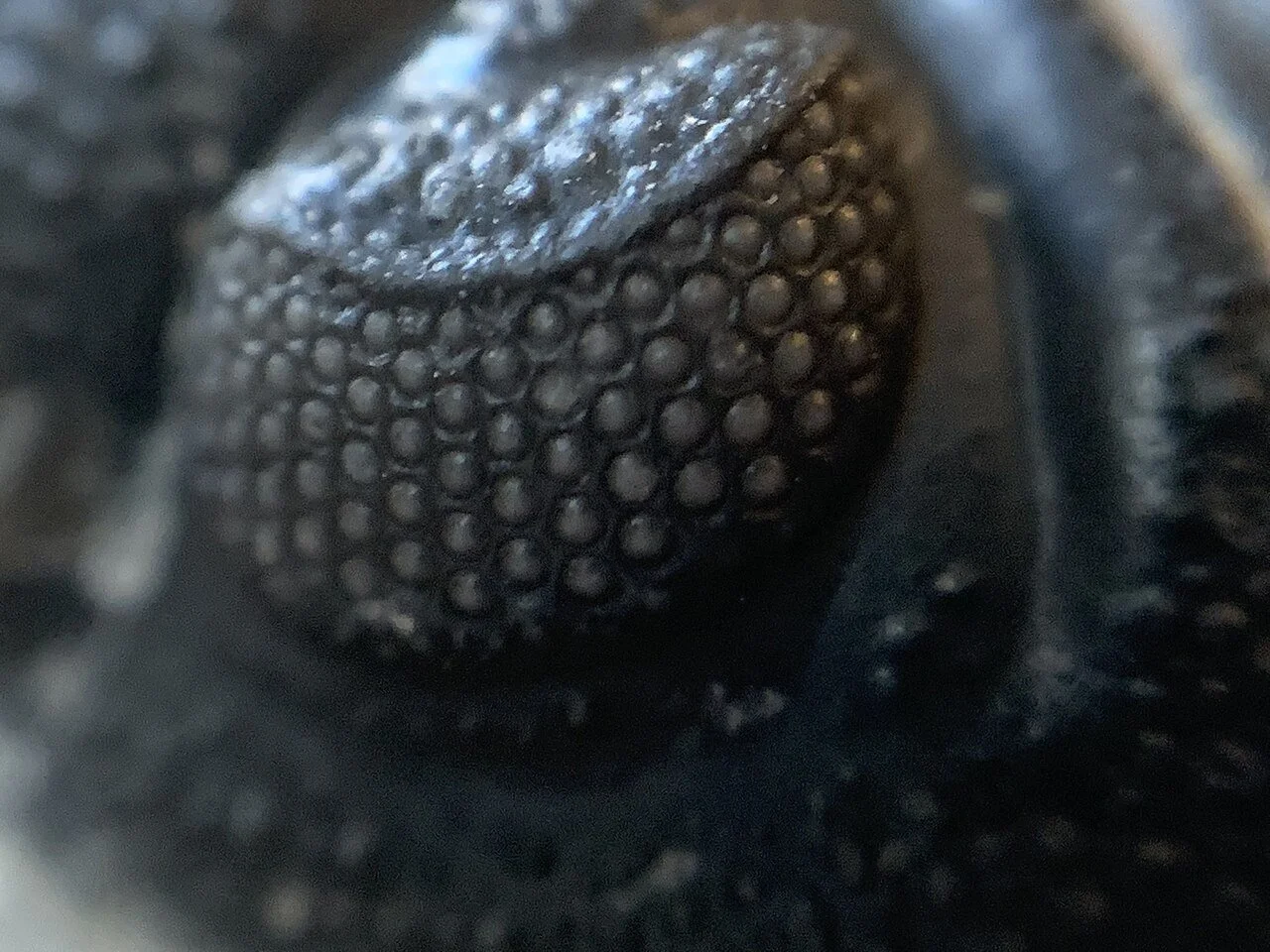
The Compound Eye of a Trilobite, made of many individual calcite lenses.
Image credit: RealGatba, CC BY-SA 4.0
One species had eyes that were remarkably well-suited for viewing objects at close and far distances at the same time [3]. A paper published in Nature Communications in 2022 detailed how the eyes of trilobites were used to design a bifocal lens capable of recording depth-of-field from a range of centimeters all the way up to kilometers, an extraordinary feat of biotechnology. It’s quite probable that trilobites will help advance the future of imaging systems [3].
Warnings from the Dead
The fact that such an enormous and successful group of animals vanished from the face of the Earth reminds us to be mindful of both our own longevity and how quickly things can turn in our lives. Even in death, these little spiky sea Roomba’s teach us to be grateful for every day we have and to leave a legacy for the next generation to remember.
Sources:
Like, share, and comment your thoughts below!